

Gender has no skin – entering the era of gender-free beauty
Not long ago, drugstore shelves resembled a theater of division: pastel bottles ‘for her’, black tubes ‘for him’. But skin doesn’t speak the language of marketing. It asks for hydration, protection, soothing. It doesn’t ask about gender. That is why a new alphabet of beauty is emerging today: one in which skincare doesn’t have to declare a gender, and self-care becomes an act of freedom. It’s a subtle yet irreversible revolution, and right before our eyes, it’s changing the face of the beauty world.
Entering a drugstore can still feel like crossing the threshold between two different worlds. On one side, shelves groan under the weight of colorful packaging promising eternal youth, labeled ‘for her’. On the other, dark tubes with bold typography and slogans about strength, simplicity, and ‘masculinity’. Yet the skin, almost stubbornly, remains indifferent to this rhetoric. It never knew a binary code. It only ever wanted what it always has: hydration, protection, soothing. It was humans who invented a narrative in which even a face cream had to choose its gender.
Today, this narrative is cracking. There is more and more talk about ‘gender-free beauty’—skincare that unites rather than divides. About cosmetics that respond to the needs of the skin rather than the expectations of stereotypes. Beauty that doesn’t divide, but invites. A cream ceases to be a declaration of identity and becomes what it truly is: an act of care for the largest organ of our body.
But before we understand why this shift is happening right now, it is worth stepping back in time and tracing the history of beauty—which was often far less binary than we might think.
History coming full circle
Contrary to appearances, this is no futuristic revolution. Rather, it is a return to what humanity has known for centuries. In ancient Egypt, eyeliner and the scent of rose oil were an everyday reality for everyone. In Renaissance palaces, powders and rouges signified status, not gender. It was only the 19th century and the Industrial Revolution that created a new need to distinctly separate “masculinity” and “femininity” in the social sphere. Cosmetics also became a tool of this division. The 20th century only reinforced these boundaries. Glossy magazine ads of the 1950s told women that beauty was an obligation, and men that cosmetics were limited to soap and cologne.
The paradox? Never before in history had beauty been so heavily gender-coded.
New generations, new language
So why are the boundaries beginning to blur right now? The answer lies in the cultural codes of generations that grew up with the internet in hand. Millennials, and Gen Z even more so, do not think in simplistic categories. They increasingly describe themselves as “gender fluid”, treating gender identity as a spectrum, not a rigid definition. And since gender does not define them, they do not want a drugstore shelf to define them either. This translates into consumer choices: young people want products that fit their lifestyle, not a stereotypical role. Skin does not ask about gender. It asks for water, lipids, and antioxidants. And younger generations understand this better than any before.
Visual culture: Instagram, fashion, and breaking taboos
The change is not only happening in laboratories or analytical reports, but across visual culture. Instagram and TikTok have given rise to a new wave of beauty influencers – boys wearing makeup with as much ease as their female peers, non-binary individuals who have finally found the space to speak with their own voice. Makeup is becoming what it has always been – a means of expression.
We see the same in fashion. Grace Jones, David Bowie, Prince… artists who questioned gender boundaries decades ago are now finding new life as icons of gender-fluid aesthetics. In Japan, the “genderless Kei” trend is growing, where young men wear makeup, dye their hair, and treat their bodies as canvases for storytelling about identity.
All of this creates a global language—a language where beauty is no longer assigned to “her” or “him”, but becomes a tool of self-expression.
The economics of inclusivity
GlobalData notes that as many as 53% of consumers pay attention to how a product matches their individual needs rather than marketing categories. Reveriepage reports that consumers consciously search for gender-neutral products—their numbers have grown by 38% in recent years.
This means that brands bold enough to step outside conventional frameworks today will set the standards tomorrow.
A subtle revolution: beauty as a common denominator
Yet, this is not a poster revolution. There are no banners or loud slogans; this revolution does not arrive with a shout. It is a subtle shift where a moisturizer simply becomes a moisturizer, and a toner—a toner. It does not need to be “for him” or “for her”. And paradoxically, it is precisely this subtlety that holds the greatest power. “Gender-free beauty” is no longer a niche; it is everyday life in the world’s biggest cities.
It is in this subtlety that the strength of brands prioritizing tasteful inclusivity lies. In a world where marketing “pride washing” is common, authenticity becomes the true value. That is why Gen Z and millennial consumers don’t just buy—they also examine brands: Are the ingredients clean? Is the company transparent? Is their communication consistent?
A return to universality
The history of beauty is coming full circle once again: from Egypt and Renaissance courts to modern metropolises. Except that today, universality has a new name – freedom of choice. It is the freedom for a skincare ritual to not have to instantly explain who we are. And perhaps that is the most beautiful thing about this revolution: the future of beauty belongs to everyone. Skin knows no boundaries, knows no categories. Gender has no skin, and the future belongs to brands that understand this.
ONE – skin beyond gender
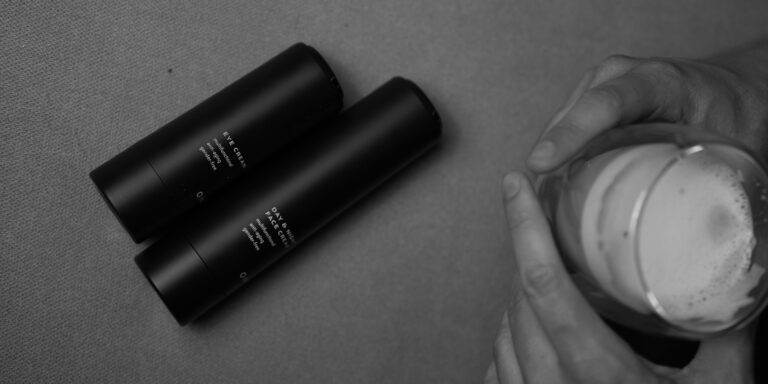
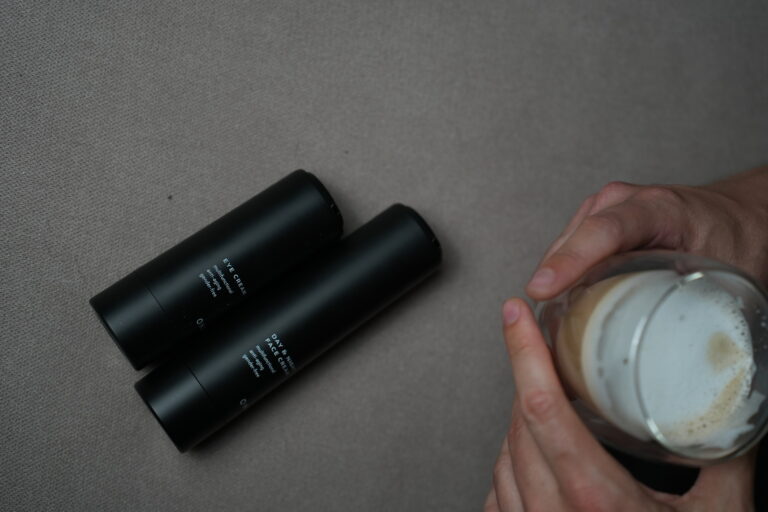
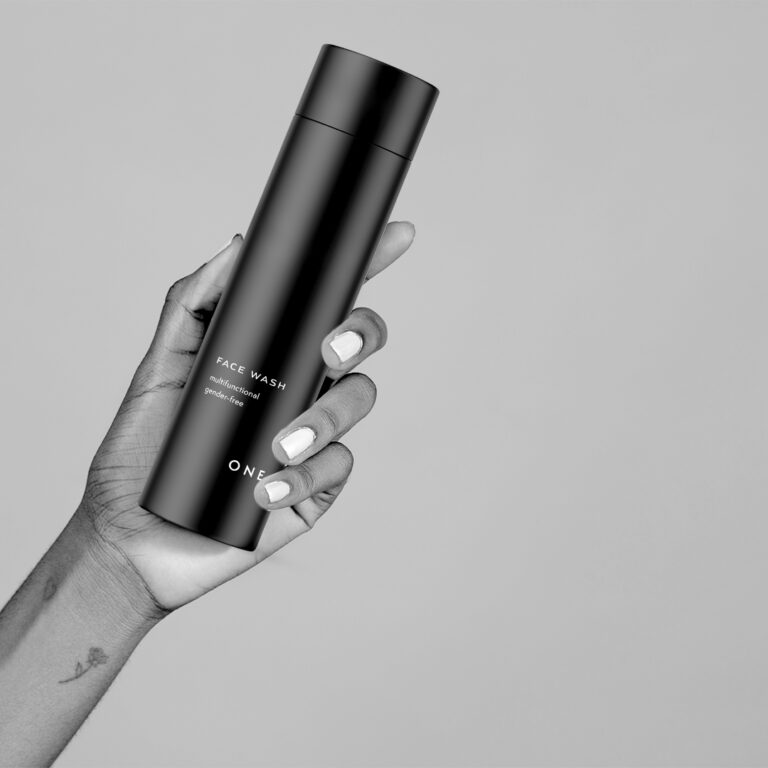
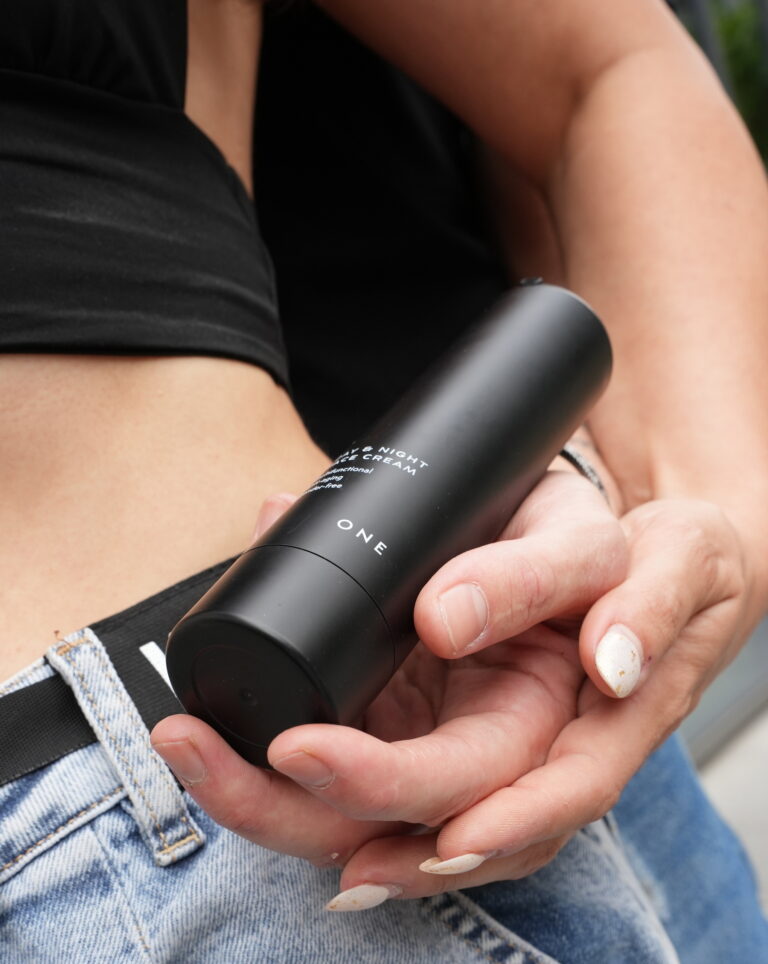
Against this backdrop emerge brands that understand the spirit of the times. ONE is one of them. It does not build its world on division, but on a common denominator: skin. Transparent ingredients, a streamlined product line, thoughtful formulas, functionality, and versatility – this is a language that speaks to everyone. Minimalist and elegant packaging doesn’t dictate who should use it. Instead, it says: “this is about you and your skin”.
This is an example of a new era’s style – luxury that doesn’t shout, but performs. It doesn’t impose, but invites. It doesn’t ask who you are, but gives you the right to define it for yourself.
A future without divisions
Looking at market data, visual culture, and the evolving values of successive generations, one thing becomes clear: gender-free beauty is not a passing trend. It is the next chapter in the history of beauty, restoring its original universality.